CRM for Automated Customer Follow-ups: The Smart Way to Manage Leads
Understanding CRM and Its Role in Business Growth
What is Customer Relationship Management (CRM)?
Imagine running a business where every customer interaction is recorded, organized, and easily accessible. Sounds like a dream, right? That’s exactly what a Customer Relationship Management (CRM) system does. A CRM platform is a centralized digital system designed to manage customer interactions, track leads, and streamline communication between businesses and their customers. Instead of juggling spreadsheets, emails, and scattered notes, companies can rely on a single platform to handle everything related to customer relationships.
At its core, CRM software collects and organizes valuable data such as contact details, communication history, sales opportunities, and follow-up tasks. Businesses use this information to improve customer service, increase sales efficiency, and deliver personalized experiences. According to industry research, CRM platforms help companies unify sales, marketing, and customer support processes into one system, allowing teams to collaborate more effectively.
Think of CRM as the brain of your sales process. It remembers what customers want, when they contacted you, and what actions need to happen next. This organized approach makes it easier to nurture relationships and close deals faster.
Businesses today operate in a highly competitive digital environment. Customers expect quick responses, personalized communication, and seamless interactions across multiple channels. Without a CRM system, meeting these expectations becomes extremely difficult. With the right CRM in place, companies can maintain long-term relationships with customers while improving overall operational efficiency.
Why Businesses Need CRM Systems Today
Modern businesses are dealing with more customer interactions than ever before. Emails, website inquiries, social media messages, phone calls, and WhatsApp conversations all contribute to the customer journey. Managing this manually can quickly become chaotic. That’s why CRM systems have become essential tools for businesses of all sizes.
One major advantage of CRM software is the ability to create a 360-degree view of every customer. Sales teams can see exactly where each prospect stands in the sales pipeline and what actions need to happen next. This visibility makes it easier to identify opportunities and prioritize high-value leads.
Statistics show that businesses implementing CRM systems often experience significant improvements in performance. Studies indicate that CRM adoption can increase sales revenue by 21% to 30%, largely because it improves lead management and customer engagement.
Another compelling reason businesses adopt CRM technology is productivity. Many employees spend hours performing repetitive administrative tasks such as entering data, scheduling calls, or sending follow-up emails. CRM systems automate these tasks, allowing teams to focus on building relationships and closing deals.
The reality is simple: companies that manage customer relationships effectively outperform those that don’t. CRM systems provide the structure and intelligence businesses need to compete in a fast-moving marketplace.
The Importance of Customer Follow-ups in Sales
How Missed Follow-ups Affect Business Revenue
Have you ever filled out a form on a website and never heard back from the company? Chances are, you moved on and found another provider. This scenario happens thousands of times every day, and it represents a massive loss of potential revenue.
Customer follow-ups play a critical role in converting leads into paying customers. A prospect who shows interest in your product or service is already halfway through the buying journey. However, without timely follow-up communication, that interest can fade quickly.
Research indicates that 60% of customers expect businesses to respond within an hour after making an inquiry. If a company fails to respond quickly, the prospect is likely to contact a competitor instead. This highlights how essential timely follow-ups are in modern sales.
Manual follow-up processes are one of the biggest reasons businesses lose potential customers. Sales teams often handle dozens or even hundreds of leads at the same time. Remembering when to call or email each lead becomes nearly impossible without automation.
Missed follow-ups lead to several business problems:
Lost sales opportunities
Poor customer experience
Disorganized communication
Reduced conversion rates
A CRM system solves this problem by automatically scheduling follow-ups and reminding sales teams when to contact prospects.
The Psychology Behind Timely Customer Communication
Customer behavior is strongly influenced by timing. When someone shows interest in a product, their curiosity and motivation are at their peak. If the business responds quickly, the probability of conversion increases dramatically.
Think of it like striking while the iron is hot. The longer you wait, the colder the lead becomes.
Timely follow-ups also create a sense of professionalism and reliability. When a business responds promptly, customers feel valued and respected. This builds trust, which is one of the most important factors in purchasing decisions.
Another psychological factor is consistency. Customers rarely make decisions after the first interaction. They need reminders, information, and reassurance before committing to a purchase. Automated follow-up sequences help maintain consistent communication without overwhelming the sales team.
In simple terms, consistent follow-ups nurture relationships, and relationships drive sales.
What is CRM Automation?
Definition of CRM Automation
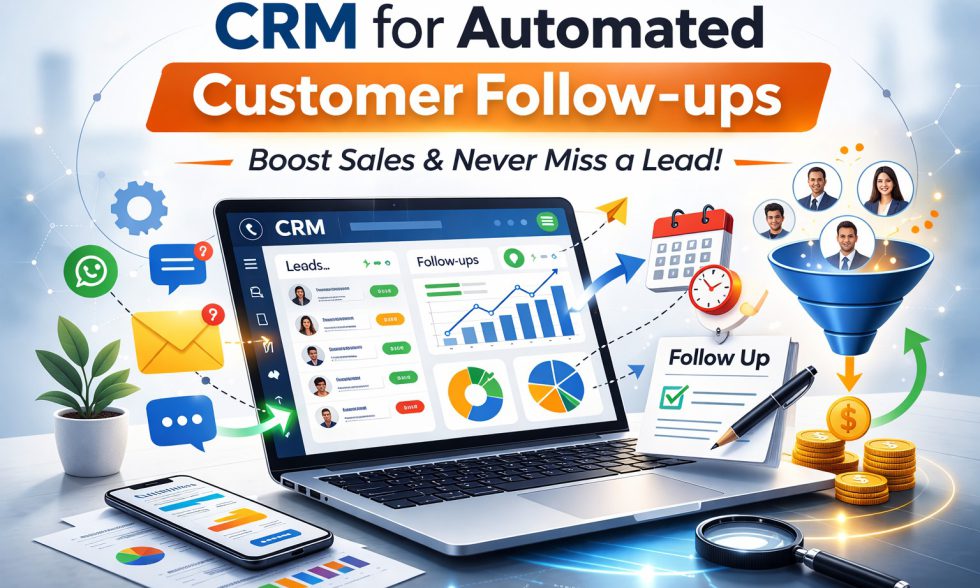
CRM automation refers to the use of technology to automate repetitive tasks involved in managing customer relationships. These tasks may include sending emails, scheduling follow-ups, assigning leads, and updating sales pipelines.
Instead of relying on manual processes, businesses can set up automated workflows that handle these tasks automatically. CRM automation helps streamline marketing, sales, and customer service operations while reducing human effort.
For example, when a potential customer fills out a form on your website, the CRM system can automatically:
Add the lead to the database
Assign it to a sales representative
Send a welcome email
Schedule follow-up reminders
All of this happens without manual intervention.
Automation not only saves time but also ensures consistency. Every lead receives the same professional follow-up process, reducing the risk of missed opportunities.
How Automation Improves Customer Follow-ups
Follow-ups are one of the most time-consuming tasks in sales. Sales representatives must track each lead, remember previous conversations, and schedule future communication. Without automation, this process quickly becomes overwhelming.
CRM automation simplifies follow-ups in several ways.
First, automated reminders ensure that no lead is forgotten. Sales teams receive notifications when it’s time to contact a prospect. This keeps the sales pipeline active and organized.
Second, automated email sequences maintain consistent communication with leads. For example, a CRM system can send a series of emails over several days or weeks, providing valuable information and encouraging the customer to take action.
Third, CRM automation improves productivity. Research shows that CRM automation significantly reduces administrative tasks, allowing sales teams to focus on higher-value activities like building relationships and closing deals.
The result is a more efficient sales process and a better customer experience.
Key Features of CRM for Automated Customer Follow-ups
Lead Capture and Lead Tracking
Lead capture is the starting point of every sales journey. CRM systems automatically collect leads from various sources such as websites, social media, landing pages, and email campaigns.
Once captured, each lead is stored in the CRM database along with relevant information like contact details, source, and interaction history. This allows businesses to track every lead from the first interaction to the final sale.
Lead tracking also helps identify which marketing channels generate the most valuable prospects.
Automated Email and Message Follow-ups
One of the most powerful features of CRM systems is automated communication. Businesses can create email templates and follow-up sequences that are automatically sent to leads at predetermined intervals.
These automated messages help nurture leads without requiring constant manual effort from sales teams.
For example:
Welcome emails
Product information messages
Meeting reminders
Promotional offers
Automated communication keeps prospects engaged throughout the sales process.
Task Reminders and Sales Pipeline Management
CRM systems provide clear visibility into the sales pipeline. Sales teams can see which leads are new, which are in negotiation, and which are ready to convert.
Task reminders ensure that every lead receives timely follow-ups. The system automatically notifies sales representatives about upcoming calls, meetings, or emails.
This structured approach prevents leads from slipping through the cracks.
Analytics and Customer Insights
CRM platforms also provide powerful analytics tools. Businesses can analyze customer behavior, track conversion rates, and identify trends in the sales process.
These insights help companies make data-driven decisions and improve their marketing strategies.
For example, CRM analytics can reveal:
Which campaigns generate the most leads
Which sales representatives close the most deals
Which customer segments generate the highest revenue
Data-driven insights give businesses a competitive advantage in the marketplace.
Benefits of Using CRM for Automated Follow-ups
Improved Sales Conversion Rates
Automated follow-ups significantly increase the chances of converting leads into customers. Consistent communication keeps prospects engaged and encourages them to move forward in the buying process.
Businesses using CRM systems often see major improvements in sales performance. Studies indicate that CRM platforms can increase sales by up to 29% while improving productivity by 34%.
These improvements happen because CRM systems eliminate inefficiencies and ensure every lead receives attention.
Time Savings and Productivity Boost
Sales teams spend a large portion of their time on administrative tasks. CRM automation removes many of these repetitive tasks, allowing employees to focus on meaningful work.
Automation can handle tasks such as:
Data entry
Follow-up reminders
Email scheduling
Lead assignment
This increases productivity and improves team performance.
Better Customer Relationships
Strong customer relationships are the foundation of successful businesses. CRM systems help maintain these relationships by ensuring consistent communication and personalized interactions.
Customers appreciate businesses that remember their preferences, respond quickly, and provide relevant information.
CRM systems make this level of personalization possible.
Why Businesses Should Use Leads CRM by Softsys Corporation
Overview of the Leads CRM Solution
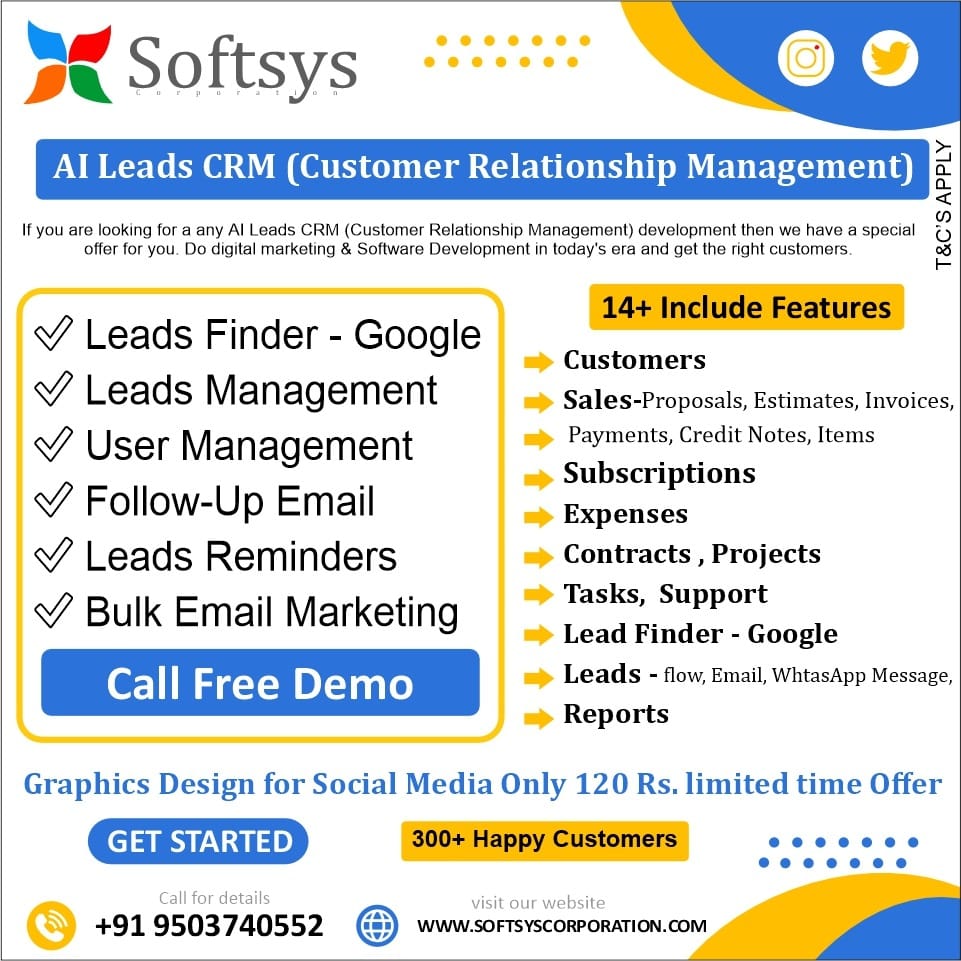
Businesses looking for a powerful CRM solution can explore Leads CRM by Softsys Corporation:
https://www.softsyscorporation.com/our-products/leads-crm/
This platform is designed to help businesses manage leads, automate follow-ups, and improve sales efficiency. It provides an organized system where companies can track customer interactions, schedule follow-ups, and analyze sales performance. CRM for Automated Customer Follow-ups
The system is particularly useful for businesses that generate leads through websites, marketing campaigns, or digital advertisements.
Key Advantages of the Softsys CRM Platform
Softsys Leads CRM offers several benefits for businesses:
| Feature | Benefit |
|---|---|
| Lead Management | Organizes and tracks every potential customer |
| Automated Follow-ups | Ensures timely communication with prospects |
| Sales Pipeline Tracking | Visualizes progress from lead to conversion |
| Customer Data Management | Stores and organizes customer information |
| Reporting and Analytics | Helps businesses analyze sales performance |
This CRM solution is especially valuable for small and medium-sized businesses looking to improve their sales processes without investing in overly complex systems.
Future of CRM Automation and AI
AI-Powered CRM and Predictive Follow-ups
The future of CRM technology lies in artificial intelligence. AI-powered CRM systems analyze customer data to predict behavior, recommend actions, and automate decision-making.
Industry experts predict that over 70% of CRM platforms will integrate AI features by 2025, transforming how businesses manage customer relationships.
AI-driven CRM systems can:
Predict which leads are most likely to convert
Suggest the best time to contact customers
Personalize marketing campaigns
Identify customer satisfaction levels
These capabilities allow businesses to move from reactive communication to proactive engagement.
Conclusion
Customer follow-ups are the lifeblood of successful sales processes. Without consistent communication, even the most promising leads can disappear. CRM systems solve this problem by organizing customer data, automating follow-ups, and providing valuable insights into customer behavior.
Automation ensures that every lead receives timely communication, improving both efficiency and conversion rates. Businesses that implement CRM solutions often experience higher productivity, better customer relationships, and increased revenue.
Solutions like Softsys Leads CRM empower businesses to manage leads effectively while eliminating manual tasks that slow down growth. CRM for Automated Customer Follow-ups
In today’s competitive market, businesses that leverage CRM automation gain a powerful advantage—turning prospects into loyal customers through smart, timely communication.
FAQs
1. What is CRM automated follow-up?
CRM automated follow-up is a system that automatically sends emails, reminders, or messages to leads and customers based on predefined rules or schedules.
2. How does CRM improve sales performance?
CRM improves sales by organizing customer data, automating follow-ups, tracking leads, and providing insights into sales opportunities.
3. Can small businesses benefit from CRM systems?
Yes. CRM platforms help small businesses manage leads efficiently, improve communication, and increase conversion rates.
4. What industries use CRM software?
CRM software is used in many industries including real estate, healthcare, education, retail, finance, and digital marketing.
5. Is CRM automation expensive to implement?
Not necessarily. Many CRM solutions offer affordable plans suitable for small and medium-sized businesses. CRM for Automated Customer Follow-ups