Manufacturing Record Management System: Digitize BMRs, Production Records and Manufacturing Operations
Manufacturing businesses are under increasing pressure to improve production efficiency, maintain accurate records, control quality, and keep every manufacturing activity traceable. When production information is managed through paper files, spreadsheets, and disconnected systems, it can become difficult to track batches, raw materials, production processes, quality checks, approvals, and final manufacturing records.
A Manufacturing Record Management System provides a digital solution for organizing and managing these critical manufacturing records in a structured and centralized environment.
For industries such as pharmaceuticals, Ayurvedic products, food manufacturing, chemicals, cosmetics, nutraceuticals, and other regulated manufacturing businesses, digital record management can help create better visibility across the production lifecycle.
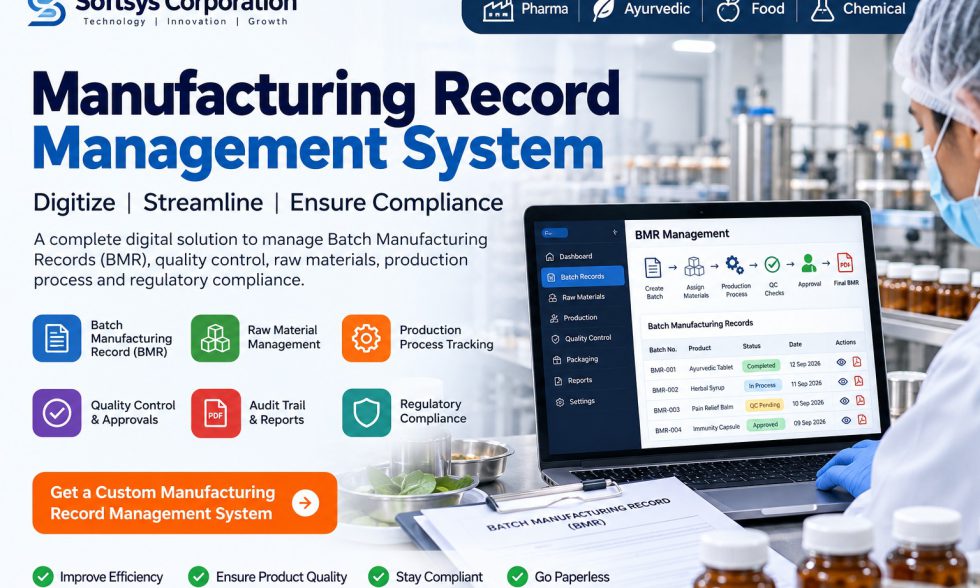
With the right manufacturing software, businesses can move from manual documentation to a more organized digital workflow for Batch Manufacturing Records (BMR), production tracking, material management, quality control, approvals, reporting, and record generation.
What Is a Manufacturing Record Management System?
A Manufacturing Record Management System is software designed to digitally manage the information and documentation generated during the manufacturing process.
Instead of maintaining multiple physical files or spreadsheets, manufacturers can maintain production-related information within a centralized system.
Depending on the business requirements, a manufacturing record management solution can manage:
- Product information
- Manufacturing formulas and recipes
- Batch creation
- Raw material allocation
- Production activities
- Manufacturing process steps
- Batch Manufacturing Records (BMR)
- Quality control checks
- Production quantities
- Yield calculations
- Packaging information
- Approvals
- Manufacturing reports
- Audit history
- Final BMR documentation
The objective is simple: make manufacturing records easier to create, track, verify, retrieve, and manage.
Why Manufacturing Businesses Need Digital Record Management
Traditional manufacturing documentation can involve large amounts of paperwork. A single batch may require multiple records covering materials, processes, operators, quality checks, approvals, and packaging.
As production volume increases, manual record management creates several operational challenges.
1. Paper-Based Documentation
Paper records can be difficult to organize, search, store, and retrieve. Manufacturing teams may need to search through files whenever they need information about a previous batch.
A digital manufacturing record management system can centralize these records and make information easier to access.
2. Manual Data Entry
Repeatedly entering production information into registers and spreadsheets can consume valuable employee time and increase the possibility of data-entry mistakes.
Digital workflows can reduce unnecessary duplication by allowing information to flow between relevant manufacturing processes.
3. Difficult Batch Tracking
Manufacturers need to know what happened during each batch.
A digital BMR management system can help organizations maintain information about:
- Batch number
- Product
- Manufacturing date
- Raw materials
- Quantities
- Production stages
- Quality checks
- Approvals
- Packaging
- Final status
This creates a clearer digital history for every batch.
4. Delayed Approvals
Manufacturing operations may involve several approval stages.
A structured approval workflow can help businesses identify pending activities and move records through the required stages more efficiently.
5. Limited Production Visibility
When manufacturing information is distributed across paper files, Excel sheets, and individual systems, management may not have a complete view of current production.
A centralized manufacturing management system can provide better visibility into batch status, production activities, quality checks, and completed records.
What Is a Batch Manufacturing Record (BMR)?
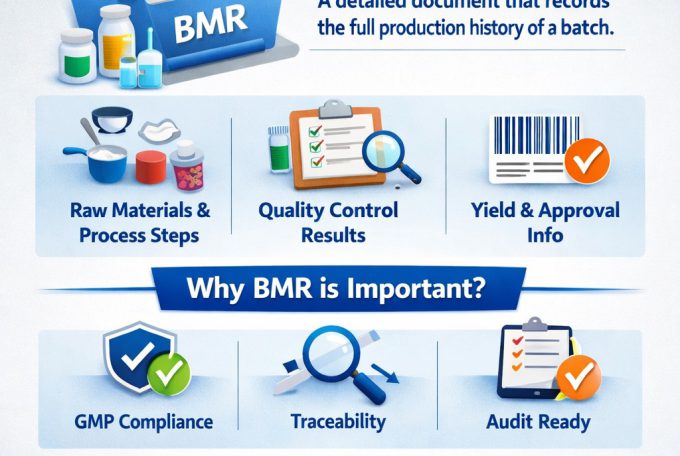
A Batch Manufacturing Record, commonly known as BMR, contains important information about how a particular manufacturing batch was produced.
A BMR may contain information such as:
- Product details
- Batch number
- Batch size
- Raw materials
- Material quantities
- Manufacturing instructions
- Process steps
- Equipment information
- Production observations
- Quality control results
- Packaging information
- Approvals
- Final batch status
For businesses producing medicines, Ayurvedic products, nutraceuticals, food products, cosmetics, chemicals, and other manufactured goods, maintaining organized batch records can be an important part of operational control.
A BMR Management System digitizes this workflow and provides a structured way to create, update, review, approve, and retrieve batch records.
Key Features of a Manufacturing Record Management System
A modern Manufacturing Record Management System can be designed around the actual workflow of a manufacturing organization.
1. Product and Formula Management
Manufacturers can maintain product information, formulas, recipes, specifications, and related manufacturing details.
For formula-based manufacturing, the system can help maintain the relationship between products, ingredients, quantities, and manufacturing processes.
2. Batch Creation
The system can provide a structured workflow for creating new manufacturing batches.
Each batch can have a unique identifier and associated product, quantity, manufacturing date, and other relevant information.
3. Raw Material Management
Raw materials are an important part of manufacturing.
A digital system can record the materials assigned to a batch, including:
- Material name
- Batch or lot number
- Required quantity
- Actual quantity
- Unit
- Material status
- Usage information
This provides greater visibility into material usage during production.
4. Production Process Tracking
Manufacturing often consists of multiple stages.
A digital manufacturing system can organize process steps and record information associated with each stage.
This can help production teams understand:
What needs to be done → What has been completed → What is pending → Who performed the activity → When it was completed.
5. Quality Control Management
Quality checks can be incorporated into the manufacturing workflow.
Depending on the business process, the system can record inspection parameters, test results, observations, approval status, and other quality-related information.
6. Approval Workflow
Manufacturing records may require review and approval before a batch can move to the next stage.
Digital approval workflows can help identify records that are:
- Draft
- In Process
- QC Pending
- Under Review
- Approved
- Rejected
- Completed
This provides better visibility for production and management teams.
7. Yield Calculation
Production yield is an important measurement for many manufacturing operations.
A manufacturing record system can capture planned quantities, actual output, losses, and final yield information based on the organization’s workflow.
8. Packaging Management
After production and quality processes are completed, packaging information can also be associated with the relevant batch record.
This creates a more complete digital manufacturing history.
9. Reports and Analytics
Manufacturing data becomes more useful when management can convert it into reports.
A customized system can provide reports related to:
- Batch production
- Material consumption
- Production status
- Quality checks
- Batch completion
- Yield
- Pending approvals
- Manufacturing history
10. Digital BMR Generation
One of the most useful capabilities is the ability to generate a structured final Batch Manufacturing Record from the information stored in the system.
Instead of manually compiling information from different documents, the system can generate a consolidated digital record according to the organization’s configured workflow.
Benefits of a Manufacturing Record Management System
Implementing digital manufacturing record management can provide several operational advantages.
Better Record Organization
Manufacturing information can be stored in a centralized system rather than being distributed across multiple files.
Faster Information Retrieval
Teams can locate batch and production information faster compared with manually searching through physical documentation.
Improved Traceability
A digital record provides a structured history of manufacturing activities and related information.
Reduced Manual Work
Automating repetitive documentation tasks can help production and administrative teams spend more time on productive activities.
Better Production Visibility
Management can obtain a clearer picture of batch progress and manufacturing activities.
Improved Collaboration
Production, quality, management, and other authorized teams can work with the same centralized information.
Better Reporting
Digital manufacturing data can be converted into useful operational reports and dashboards.
Scalable Manufacturing Operations
As production volumes increase, a structured software system can help organizations manage growing amounts of manufacturing information more efficiently.
Manufacturing Record Management for Pharmaceutical and Ayurvedic Businesses
Pharmaceutical and Ayurvedic manufacturing businesses often work with formulas, raw materials, batches, production processes, quality checks, and detailed documentation.
A customized BMR Management System can be designed around these workflows.
For example, an Ayurvedic manufacturing workflow may include:
Create Product Formula → Create Batch → Assign Raw Materials → Start Production → Record Process Steps → Perform QC Checks → Calculate Yield → Packaging → Approval → Generate Final BMR
Digitizing this workflow can provide a centralized view of the entire manufacturing lifecycle.
However, software should be configured according to the organization’s actual processes, documentation requirements, quality procedures, and applicable regulations. A software system should support compliance processes rather than being treated as a substitute for professional regulatory or quality guidance.
Manufacturing Record Management vs. Excel and Paper Records
Many small and growing manufacturers begin with Excel spreadsheets and physical registers.
These tools can be useful for basic record keeping, but they can become difficult to manage as the number of products, batches, employees, and manufacturing activities increases.
| Capability | Paper Records | Excel | Manufacturing Record Management System |
|---|---|---|---|
| Batch Management | Manual | Basic | Structured |
| BMR Management | Manual | Possible | Digital Workflow |
| Production Tracking | Limited | Manual | Centralized |
| Quality Checks | Paper-Based | Manual | Configurable |
| Approval Workflow | Manual | Limited | Digital |
| Reporting | Time-Consuming | Manual | Automated/Configurable |
| Record Search | Slow | Moderate | Fast |
| Centralized Data | No | Limited | Yes |
| Scalability | Low | Moderate | High |
The right choice depends on the size, complexity, industry, and operational requirements of the manufacturer.
How to Choose the Right Manufacturing Record Management Software
Before investing in manufacturing software, businesses should evaluate more than just the software interface.
Consider the following questions:
Does it support your manufacturing workflow?
Every manufacturer operates differently. The software should be configurable around your actual processes.
Can it manage batches?
Batch creation, tracking, status management, and historical records should be easy to manage.
Can it manage raw materials?
The system should provide appropriate material tracking capabilities based on your business requirements.
Can it support quality workflows?
Quality checks, reviews, and approvals should be integrated where required.
Can it generate reports?
Management needs actionable information, not just stored data.
Is it scalable?
The system should be capable of growing with your products, users, batches, and manufacturing operations.
Can it integrate with other systems?
Depending on your business, integration with ERP, inventory, accounting, CRM, barcode, laboratory, or other systems may be valuable.
Can it be customized?
Manufacturing businesses frequently have unique workflows. Customization can be important when standard software does not fully match operational requirements.
Why Choose Softsys Corporation for Manufacturing Software Development?
Softsys Corporation is a technology solution provider headquartered in Pune, India, with a focus on developing digital products and technology solutions for businesses. Its website also presents Softsys BMR CRM as one of its products, alongside software and application development offerings.
For manufacturers looking to digitize their production documentation, Softsys Corporation can develop a customized manufacturing record management solution around the organization’s workflow.
A customized solution can be designed around areas such as:
- Product and formula management
- Batch management
- Raw material management
- Production process tracking
- BMR management
- Quality control
- Approval workflows
- Yield calculation
- Packaging
- Reports and dashboards
- Digital document generation
- User and role management
- Business-specific workflows
- System integrations
The advantage of customization is that the software can be designed around the manufacturer’s process rather than forcing the organization to completely change its workflow to fit generic software.
The Future of Manufacturing Is Digital
Manufacturing organizations are increasingly looking for ways to improve visibility, reduce manual processes, and make operational information easier to manage.
A Manufacturing Record Management System can become an important part of this digital transformation by bringing production records, batch information, materials, quality processes, approvals, and reports into a centralized digital environment.
For growing manufacturers, the transition from paper-based documentation to digital manufacturing records can help create a more organized and scalable operational foundation.
The goal is not simply to replace paper with software.
The real goal is to create a connected manufacturing workflow where information moves efficiently from product formulation and raw materials through production, quality control, approval, packaging, and final record generation.
Ready to Digitize Your Manufacturing Records?
If your organization is still managing BMRs, production records, raw materials, quality checks, or manufacturing documentation through paper files and spreadsheets, it may be time to explore a customized digital solution.
Softsys Corporation can help businesses design and develop customized Manufacturing Record Management Software based on their manufacturing workflow.
Whether you need a BMR Management System, Batch Manufacturing Record Software, Production Record Management System, or a complete customized manufacturing application, the solution can be designed around your business requirements.
Build a smarter manufacturing workflow. Digitize your records. Improve visibility. Manage every batch with greater confidence.
Talk to Softsys Corporation
Softsys Corporation
Pune, Maharashtra, India
Phone: +91 9503740552
Email: hello@softsyscorporation.com
Website: https://www.softsyscorporation.com/
CTA: Request a Manufacturing Software Consultation