CRM for Automating Customer Follow-ups: Boost Sales with Smart Lead Management
Understanding CRM and Customer Follow-up Automation
What Is CRM and Why Businesses Need It
Customer Relationship Management, commonly known as CRM, is more than just software—it’s the backbone of modern sales and customer management. In simple terms, CRM helps businesses track leads, manage customer interactions, and maintain long-term relationships with their clients. When companies use CRM effectively, they gain a complete view of their sales pipeline, customer behavior, and communication history. This centralized system makes it easier for teams to stay organized and respond to customer needs quickly.
CRM systems also help businesses automate repetitive tasks like data entry, lead tracking, and follow-ups. By reducing manual work, teams can focus more on building relationships and closing deals instead of spending hours managing spreadsheets or emails. According to industry reports, companies that use CRM systems can experience up to a 29% increase in sales and a 34% boost in sales productivity.
Think of CRM as a digital command center for your customer relationships. Instead of juggling notes, emails, and phone logs across different tools, everything is stored in one place. This not only improves efficiency but also ensures that every customer interaction is recorded and accessible to the entire team.
Businesses today operate in a fast-paced digital environment where customers expect quick responses and personalized communication. Without a CRM system, it becomes difficult to maintain consistency in follow-ups and customer engagement. CRM tools help companies maintain structured workflows, ensuring every lead receives the attention it deserves.
The Importance of Timely Customer Follow-ups
If there’s one golden rule in sales, it’s this: the fortune is in the follow-up. Many potential deals are lost simply because businesses fail to follow up with leads at the right time. Customers may show interest initially, but without consistent communication, they quickly move on to competitors.
Timely follow-ups are critical because they keep the conversation alive and demonstrate that your business values the customer. When a lead receives prompt communication, they are far more likely to trust the company and consider purchasing its products or services. CRM systems make this possible by automating reminders and follow-up actions based on specific triggers or timelines.
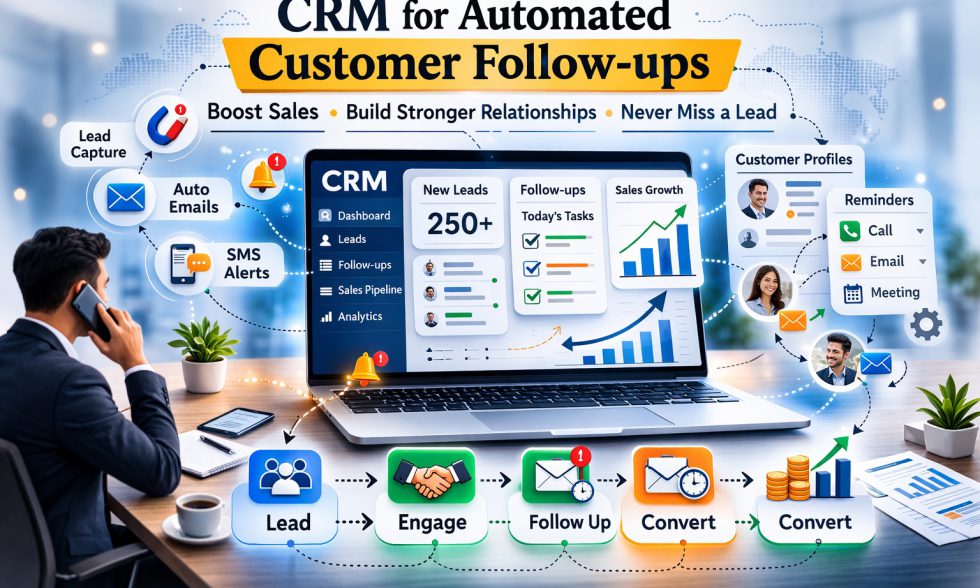
Automated follow-ups ensure that every prospect receives the right message at the right moment. For example, if a potential customer downloads a brochure or fills out a contact form, the CRM can instantly schedule a follow-up email or call reminder. This proactive communication significantly increases engagement rates and conversion chances.
Businesses that implement CRM-based follow-up strategies often see stronger customer relationships and faster deal closures. Automated systems eliminate the risk of forgetting a lead or missing an opportunity. Instead of relying on memory or manual tracking, CRM ensures that every interaction is planned and executed efficiently.
The Challenges of Manual Customer Follow-ups
Missed Opportunities and Delayed Responses
Imagine running a business where every customer inquiry needs to be tracked manually. You receive emails, phone calls, WhatsApp messages, and website inquiries—all at different times. Without a structured system, it becomes easy to lose track of conversations and forget to follow up with potential clients.
Manual follow-ups often lead to missed opportunities because human memory isn’t perfect. Sales teams might forget to call a prospect back or fail to send a promised email. Even small delays in communication can push a customer toward a competitor who responds faster.
This issue becomes even more serious as the business grows. When a company handles dozens or hundreds of leads every week, managing follow-ups manually becomes nearly impossible. Important leads can slip through the cracks, resulting in lost revenue and reduced customer satisfaction.
CRM systems solve this problem by automatically tracking every lead interaction and scheduling follow-up tasks. Instead of relying on memory or scattered notes, businesses can rely on automated workflows that ensure no opportunity is missed.
Time-Consuming Sales Processes
Sales teams already have a lot on their plate. They need to communicate with prospects, schedule meetings, send proposals, negotiate deals, and maintain relationships with existing clients. Adding manual follow-up management to this workload only increases the pressure.
Research shows that sales representatives spend a large portion of their time on non-selling tasks such as data entry and follow-up management. Automated CRM systems eliminate much of this busywork by handling repetitive tasks like email sequences, reminders, and pipeline updates.
Automation doesn’t replace human interaction—it simply enhances it. By removing repetitive administrative work, CRM allows sales teams to focus on what they do best: building relationships and closing deals.
This shift dramatically improves productivity. Teams can manage more leads, respond faster to inquiries, and maintain consistent communication with prospects. As a result, businesses experience improved efficiency and higher sales performance.
How CRM Automates Customer Follow-ups
Automated Email and Message Sequences
One of the most powerful features of CRM software is the ability to automate communication through email and message sequences. Instead of sending follow-up emails manually, businesses can create pre-designed workflows that automatically send messages based on customer actions or time intervals.
For example, when a new lead registers on a website, the CRM can immediately send a welcome email followed by a series of educational or promotional messages. These automated sequences nurture leads and guide them through the sales funnel without requiring constant manual input from the sales team.
Automation also ensures consistency in communication. Every lead receives the same professional and timely follow-up experience, which strengthens brand credibility and trust.
Smart Reminders and Task Automation
CRM systems act like a personal assistant for sales teams. They automatically create reminders for calls, meetings, or follow-ups based on the lead’s activity or stage in the sales pipeline.
For instance, if a prospect shows interest in a product but hasn’t responded for a few days, the CRM can notify the sales representative to reconnect with the customer. This proactive approach helps maintain engagement and prevents potential deals from going cold.
Automated reminders ensure that every action is tracked and executed at the right time. This structured approach significantly improves the efficiency of sales operations and keeps teams organized.
Behavior-Based Follow-up Triggers
Modern CRM systems can trigger follow-ups based on customer behavior, such as clicking a link, downloading content, or visiting a pricing page. These triggers allow businesses to deliver highly relevant messages exactly when the customer is most interested.
For example, if a prospect repeatedly opens a promotional email, the CRM can alert the sales team to initiate a conversation. Similarly, if a customer abandons a product inquiry, the system can automatically send a reminder or offer additional information.
This data-driven approach makes follow-ups smarter and more personalized. Instead of sending random messages, businesses can respond to real customer actions, significantly improving engagement and conversion rates.
Key Features of Softsys Leads CRM
Centralized Lead Management
The Softsys Leads CRM
https://www.softsyscorporation.com/our-products/leads-crm/
provides a centralized platform where businesses can store and manage all their leads in one place. Instead of scattered spreadsheets and emails, every customer interaction is recorded and accessible within the CRM dashboard.
Centralized lead management helps teams track communication history, follow-up schedules, and deal progress effortlessly. This structured system ensures that no lead is forgotten and every opportunity is properly managed.
Sales Pipeline Tracking
A visual sales pipeline is one of the most valuable features of a CRM system. It allows businesses to track leads as they move through different stages—from initial inquiry to final sale.
By analyzing pipeline data, teams can identify bottlenecks in the sales process and improve their strategies. Managers can also monitor team performance and forecast revenue more accurately.
Automated Communication and Notifications
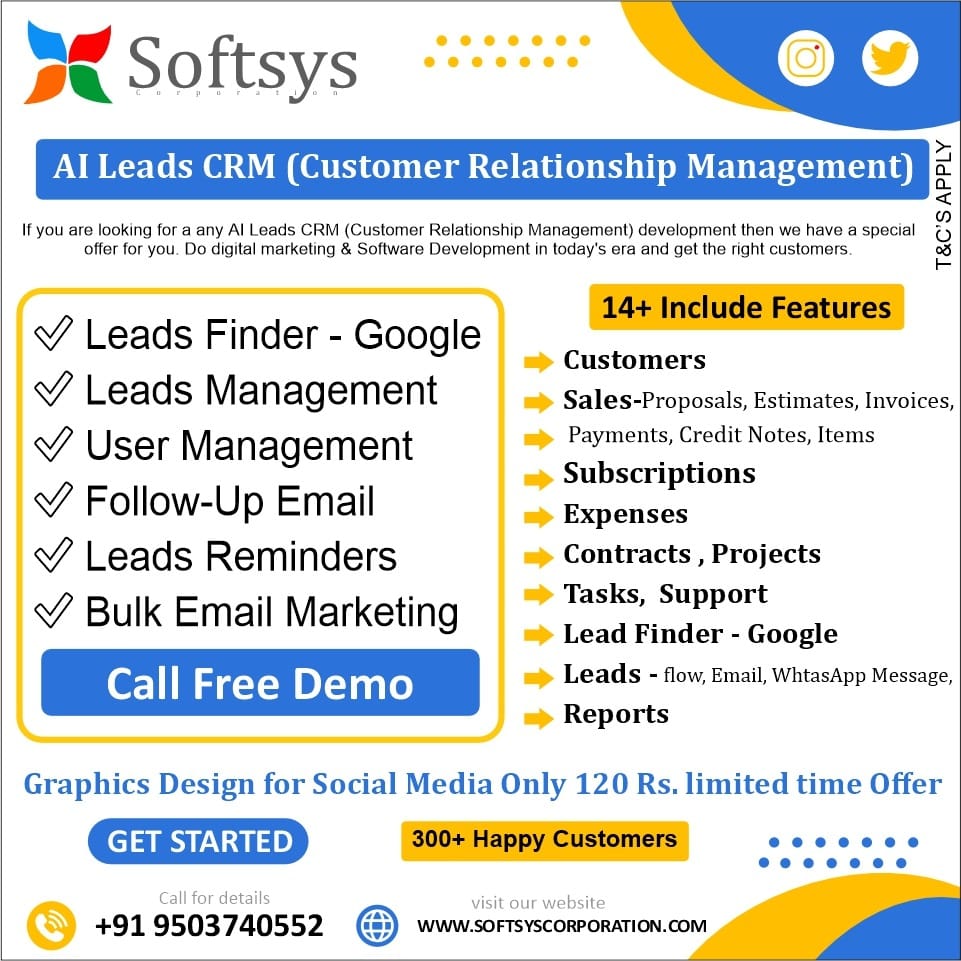
Softsys Leads CRM enables businesses to automate follow-up messages, reminders, and notifications. These features ensure that every lead receives timely communication without requiring manual intervention from the sales team.
Automated notifications also keep team members informed about lead activity and upcoming tasks, improving collaboration and efficiency.
Benefits of Using CRM for Follow-up Automation
Increased Sales Conversion
CRM automation has a direct impact on sales performance. Studies show that CRM systems can increase sales by up to 29% and significantly improve conversion rates.
Automated follow-ups ensure that leads are nurtured consistently throughout the sales journey. This continuous engagement builds trust and increases the likelihood of converting prospects into paying customers.
Improved Customer Experience
Customers appreciate businesses that communicate promptly and professionally. CRM automation ensures that every interaction is timely, relevant, and personalized.
This consistent communication enhances the customer experience and strengthens brand reputation. When customers feel valued and understood, they are more likely to remain loyal and recommend the business to others.
Higher Team Productivity
Automation dramatically reduces the administrative workload for sales teams. Instead of spending hours on manual data entry and follow-ups, employees can focus on strategic activities such as relationship building and closing deals.
This improved efficiency leads to higher productivity and better overall business performance.
Best Practices for Automating Customer Follow-ups with CRM
Personalizing Follow-up Communication
Automation should never feel robotic. The most effective follow-up strategies combine automation with personalization. Businesses should tailor their messages based on customer preferences, behavior, and purchase history.
Personalized communication makes customers feel valued and increases engagement rates.
Using Data to Optimize Customer Engagement
CRM systems collect valuable customer data that can be used to refine marketing and sales strategies. By analyzing customer interactions, businesses can identify trends, optimize follow-up timing, and improve messaging.
Data-driven decision-making ensures that follow-ups are not only timely but also highly relevant to the customer’s needs.
Why Businesses Should Choose Softsys Leads CRM
Businesses today need tools that simplify operations while improving customer engagement. Softsys Leads CRM offers a powerful solution for automating follow-ups, managing leads, and optimizing sales workflows.
With its intuitive interface, automated communication features, and centralized lead management, the platform helps businesses maintain consistent customer relationships. Instead of chasing leads manually, companies can rely on intelligent automation to nurture prospects and close deals faster.
For startups, small businesses, and growing enterprises, implementing a CRM system like Softsys Leads CRM can transform the way they manage customers and drive revenue growth.
Conclusion
Customer follow-ups are the backbone of successful sales strategies. Without consistent communication, even the most promising leads can disappear. CRM systems solve this problem by automating follow-ups, organizing customer data, and streamlining sales workflows.
Automation ensures that every lead receives timely and personalized communication, improving engagement and conversion rates. Businesses that adopt CRM solutions gain a competitive advantage by responding faster, nurturing leads effectively, and maintaining stronger customer relationships. CRM for Automating Customer Follow-ups.
Softsys Leads CRM provides a comprehensive platform designed to simplify lead management and automate customer follow-ups. By integrating this system into daily operations, businesses can increase productivity, improve customer satisfaction, and ultimately drive higher sales growth.
FAQs
1. What is CRM follow-up automation?
CRM follow-up automation is the process of using CRM software to automatically schedule and send follow-up messages, reminders, or tasks to leads and customers based on predefined workflows.
2. How does CRM improve sales performance?
CRM improves sales performance by organizing customer data, automating repetitive tasks, and ensuring timely follow-ups, which increases productivity and conversion rates.
3. Is CRM suitable for small businesses?
Yes, CRM systems are highly beneficial for small businesses because they help manage leads efficiently, automate follow-ups, and improve customer relationships without requiring large teams.
4. Can CRM automate emails and reminders?
Yes, most modern CRM systems can automatically send emails, schedule reminders, and trigger follow-ups based on customer behavior or sales pipeline stages.
5. Why are automated follow-ups important in sales?
Automated follow-ups ensure that no lead is forgotten and every prospect receives timely communication, increasing engagement and improving the chances of closing deals. CRM for Automating Customer Follow-ups.